
安东尼·瓦杜《Mezzetin》(弹吉他的梅兹坦)
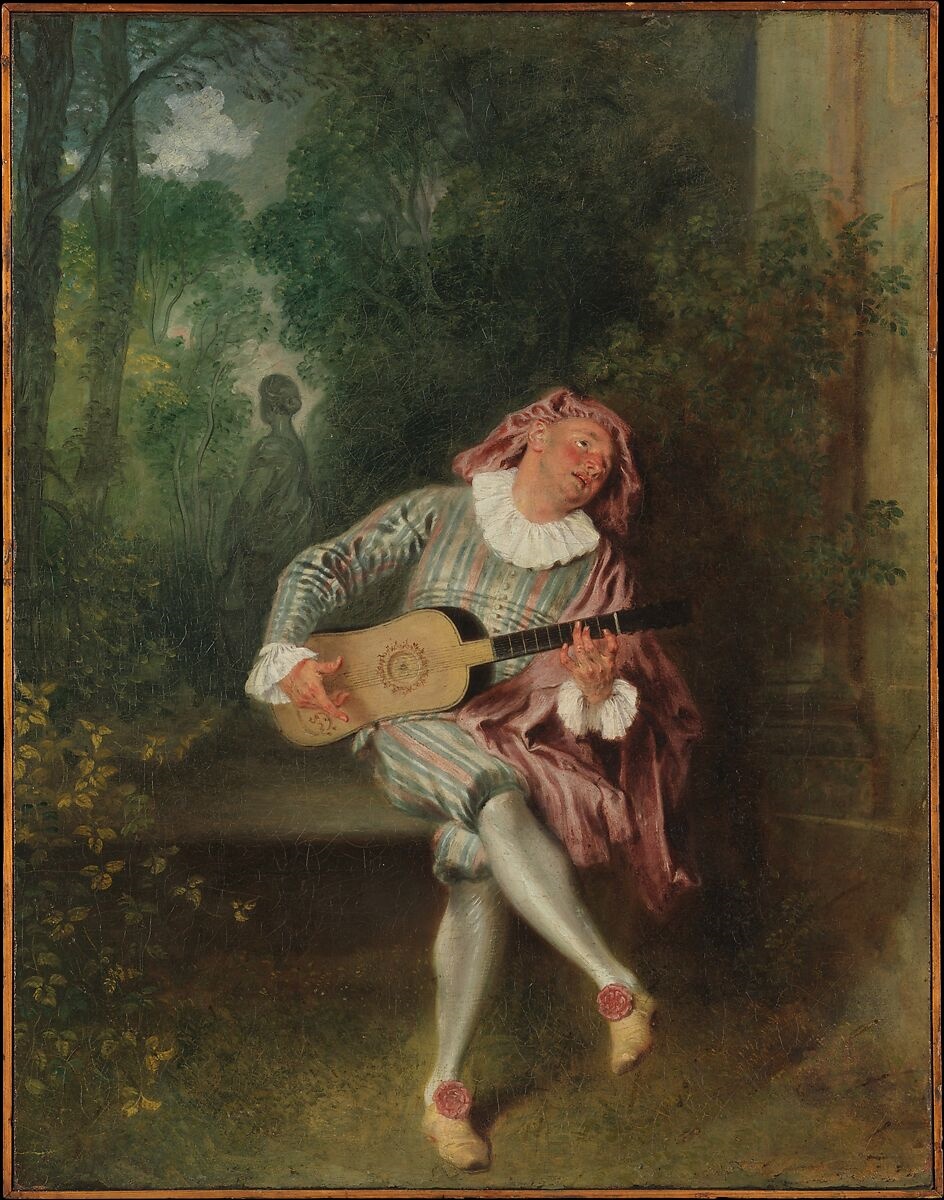
Mezzetin(弹吉他的梅兹坦)
作者:Antoine Watteau(安东尼·瓦杜)(法国人French,瓦朗谢纳,1684-1721年,马恩河畔诺让市),
年代:1718-1720年
材质:画布油画
尺寸:21 3/4 x 17 in. (55.2 x 43.2 cm)
收藏:纽约大都会博物馆
安托万·华托的《Mezzetin》表面上描绘的是一位正在弹吉他的意大利喜剧角色,但华托刻意抽空了这个人物原本应有的喜剧性与表演性:他没有观众、没有舞台,眼神游离,姿态介于演出与独处之间,音乐更像是对自身的重复而非传达。柔软、轻盈的洛可可色彩并未制造快乐,反而让人物显得随时会融入背景,情绪悬而未决。这幅画的核心不是庆典,而是被拒绝或无从抵达的欲望——一首没有接收者的情歌,也揭示了华托最擅长的主题:欢乐之后、表演之内,那一瞬间安静而忧郁的空白。
梅兹坦是意大利即兴喜剧中的典型滑稽人物,他在巴黎的舞台上也有一席之地。他有时捣乱,有时狡猾,有时又为爱情而苦恼。这幅著名的油画最初为华铎的友人让·德·朱利安尼所有,后来又为俄国女皇叶卡捷琳娜二世所藏。有一幅粉笔试作根据模特勾勒出了梅兹坦歪着的头,目前也藏于大都会博物馆。此图中梅兹坦的头部和他庞大却瘦削的双手都极富表现力。花园里背对着梅兹坦的塑像是维纳斯。
Mezzetin, a stock comic character of the Italian commedia dell’arte, became an established archetype on the Paris stage, but was an innovative subject for painting in Watteau’s lifetime. Here Mezzetin inhabits the overgrown gardens beloved by Watteau. His costume typically included a striped jacket and knee breeches, a floppy hat, a ruff, and a short cape; his personality was by turns interfering, devious, and lovelorn, as indicated by the distant female statue who turns her back to him. Watteau’s delicate touch, especially evident in the figure’s hands and clothing, is exceptionally well preserved in this painting.